
Bentonville Directory Collections Compared
Bentonville has no single complete run on one shelf. The useful route joins the Bentonville Public Library, Rogers Historical Museum Research Library, one cataloged regional reel, and early Benton County records. The Rogers museum inventory verifies local city and business telephone directories beginning by 1904, but it does not publish a complete Bentonville year list or name every publisher. A missing catalog year is not proof that no directory was issued.
| Collection | Years or extent | Where held | Access |
|---|---|---|---|
| Local city and business telephone directories | Earliest listed edition is 1904; full run not posted | Rogers Historical Museum Research Library | On site, Tuesday through Saturday, 10 a.m. to 4 p.m. |
| Tri-Cities historical volume | 1947 | St. Louis County Library microfilm | Cataloged reel; confirm use terms |
| HeritageQuest historical directories | National set; Bentonville years not listed | Bentonville Public Library | Library database; card or offsite login may apply |
| Local papers, maps, family and cemetery files | Varies by series | Enfield Center and NAGS | In person; confirm specialist hours |
| Benton County Pioneer name indexes | Journal since 1955; indexes for volumes 1 through 33 | BCHS and FamilySearch catalog | Catalog lead; some access limits may apply |
The table separates a verified year from an open-ended collection. It also prevents a common error: claiming a complete commercial publisher run when the research inventory does not name one. Ask the museum which Bentonville editions are on hand before a visit. In the library database, try Bentonville and Tri-Cities terms because regional books may combine Bentonville with Rogers and Springdale.
Bentonville Directories Reach 1904
The first firm shelf marker is a number worth keeping straight. The Rogers Historical Museum research inventory lists local city and business telephone directories with the earliest edition dated 1904. Its research library also holds the 1903 Benton County plat map and index, newspapers, obituary volumes, cemetery surveys, and place files. These sources let one name branch into an address, lot, news item, or family lead.
The library's local and Arkansas history network shows how broad that regional research shelf is.

That network matters because Bentonville's printed record is distributed. A telephone book may give a subscriber and number, while a residential or business volume may add a firm, spouse, or street address. Each edition must be read on its own terms.
Note: The verified 1904 date marks the earliest listed edition, not a claim that every later year survives.
Bentonville Directory Research at Enfield
The Bentonville Public Library history and genealogy service is the practical city starting point. The Downtown library stands at 405 S. Main Street and can be reached at 479-271-3192. Published hours are Monday through Thursday, 9 a.m. to 8 p.m., and Friday through Saturday, 9 a.m. to 5 p.m. It is closed Sunday. HeritageQuest includes historical directories beside census, land, military, immigration, tax, map, and mortality-schedule material.
The library's genealogy database page shows the digital route before a shelf visit.

The screen supports a useful first check, but licensing and offsite sign-in rules can change. Exact Bentonville years are not listed on the public page. A card may be needed away from the building, so call when a trip depends on a certain edition.
The William R. Enfield Local History and Genealogy Center adds a quiet room and compact shelving. Northwest Arkansas Genealogical Society manages its specialist collection of local papers, passenger lists, maps, family histories, and cemetery material.

The dedicated room makes it easier to keep a directory open beside a census image, map, or family file. Confirm NAGS specialist hours before relying on staff help.
Bentonville City Directory on Microfilm
A cataloged 1947 Tri-Cities volume joins Bentonville, Rogers, and Springdale in one regional directory. A name may therefore sit under a shared title rather than a Bentonville-only label. The publisher is not stated in the available result, so it should not be guessed.
The St. Louis County Library Arkansas directory catalog records the reel.
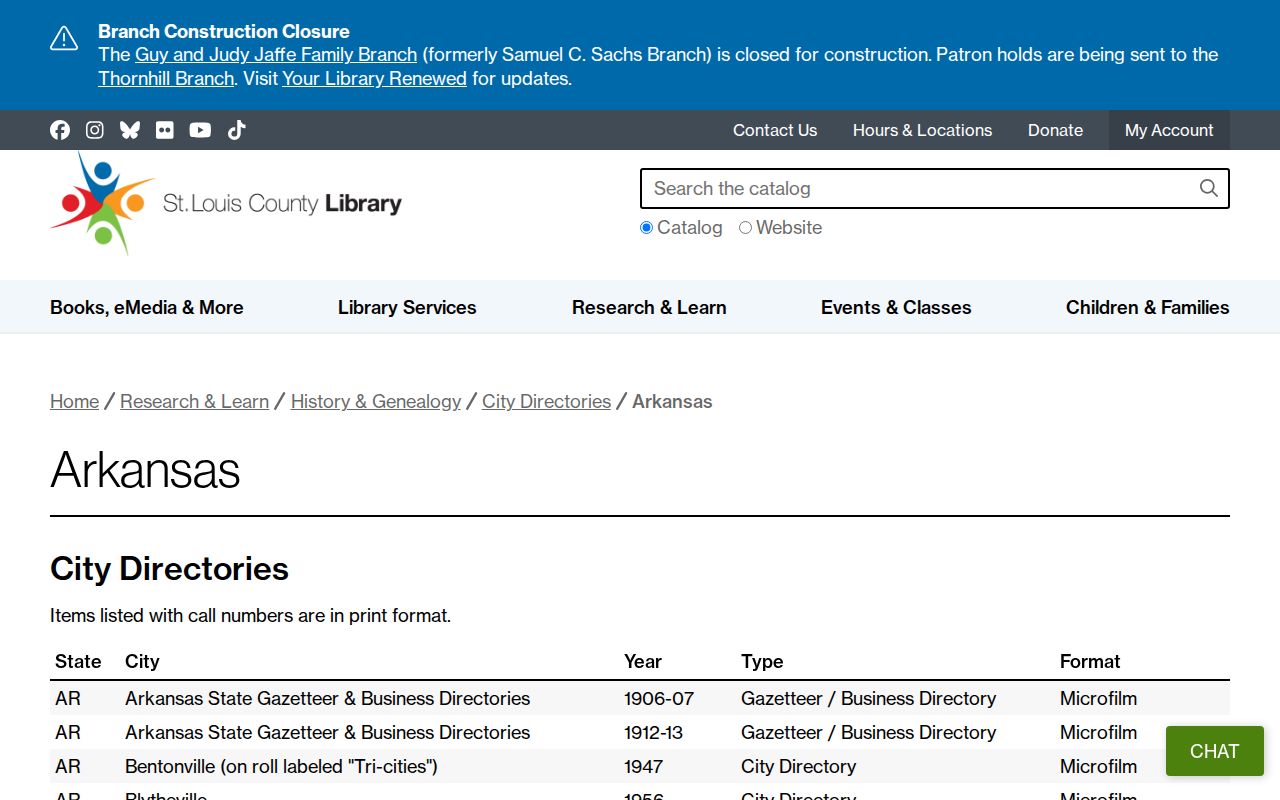
This 1947 marker fits between the public 1940 and 1950 censuses. It can place an adult between those snapshots, but an omitted name proves little. The person may have moved, lacked a listed telephone, lived beyond the publisher's boundary, or appeared under another spelling.
Read Bentonville Directory Entries Carefully
A printed entry compresses facts into a short line. Given names and street types may be shortened. A spouse can appear in parentheses, and a widow notation may name a deceased spouse. Some editions list a work role or firm; telephone books may focus only on subscriber name, number, and address. Bentonville-specific symbols must be checked against the front matter of the exact volume. No authoritative sample page confirms every possible mark appears locally.
| Printed name | Copy spelling, initials, order, and cross-references exactly. |
|---|---|
| Household clue | Record spouse or widow wording only when the edition prints it. |
| Work clue | Transcribe the role or firm without assuming it stayed current. |
| Place clue | Copy the full home or business address and every street prefix. |
| Volume context | Save the title, year, publisher if shown, page, and key. |
A good citation includes the entry plus the title page and abbreviation key. It also labels whether the entry came from a residential list, business list, telephone book, or street-order section.
- Criss-cross directory
- A street-order section that begins with an address and then names the listed occupant or subscriber.
- Householder index
- A list centered on the person treated by that publisher as the main household entry.
- Abbreviation key
- The volume's own legend for shortened names, streets, roles, and symbols.
Trace Bentonville Families by Directory
A Bentonville printed directory works best as one dated point in a longer trail. Start with a person already tied to the city by a census, deed, obituary, school record, or family paper. Search the closest edition. Move one volume at a time, and record both first and last appearances. Those endpoints narrow a move, marriage, death, or name change, but do not set an exact date.
- Write down the known name, spelling variants, time range, and one confirmed Bentonville place.
- Check the nearest directory year and copy every household member, address, role, and symbol.
- Move to the prior and next available editions. Treat a gap as a gap, not proof of absence.
- Pair the result with the closest public federal census. Public schedules now run through 1950.
- Test any change against deeds, probate, obituaries, newspapers, maps, or yearbooks.
The 1890 population schedules were largely destroyed nationwide. For that decade, Benton County tax rolls, deeds, newspapers, and directory evidence carry more weight. The Bentonville previous residents trail applies these sources to one address rather than one surname.
Note: A directory appearance marks a publication snapshot and should never become an exact arrival or departure date.
Nine Bentonville Maps Add Context
Directory names gain context when the old address has a building around it. Library of Congress holdings include Bentonville Sanborn maps for 1886, 1892, 1897, 1904, 1908, 1914, 1922, 1933, and 1940. A sheet can show a footprint, use, construction clues, and nearby structures. It cannot name an occupant by itself.
The map sequence pairs with other verified local evidence:
- 1886 to 1897: early views can be paired with county tax and assessor indexes.
- 1903 to 1904: the plat map and first verified local directory date form a strong place-and-name pair.
- 1908 to 1922: maps can bridge BCHS deed books and shifting street descriptions.
- 1933 to 1940: sheets can be checked against public census and newspaper evidence.
Match the sheet index and historic street number. A legal lot and block can stay stable when a street label does not. The map proves what was drawn at a place on a date, not who lived there.
Bridge Bentonville Directory Gaps
When a directory year is missing, switch source types. The Benton County Historical Society holds personal-tax surname indexes for 1837 through 1899, real-estate tax indexes, assessor books, deed film, early deed indexes and books, plats, obituaries, cemetery books, census material, and old newspapers. Its room at 306 NW 2nd Street is listed as open Tuesday through Friday, 10 a.m. to 3 p.m.
The historical society collection page shows why one room can bridge several breaks.
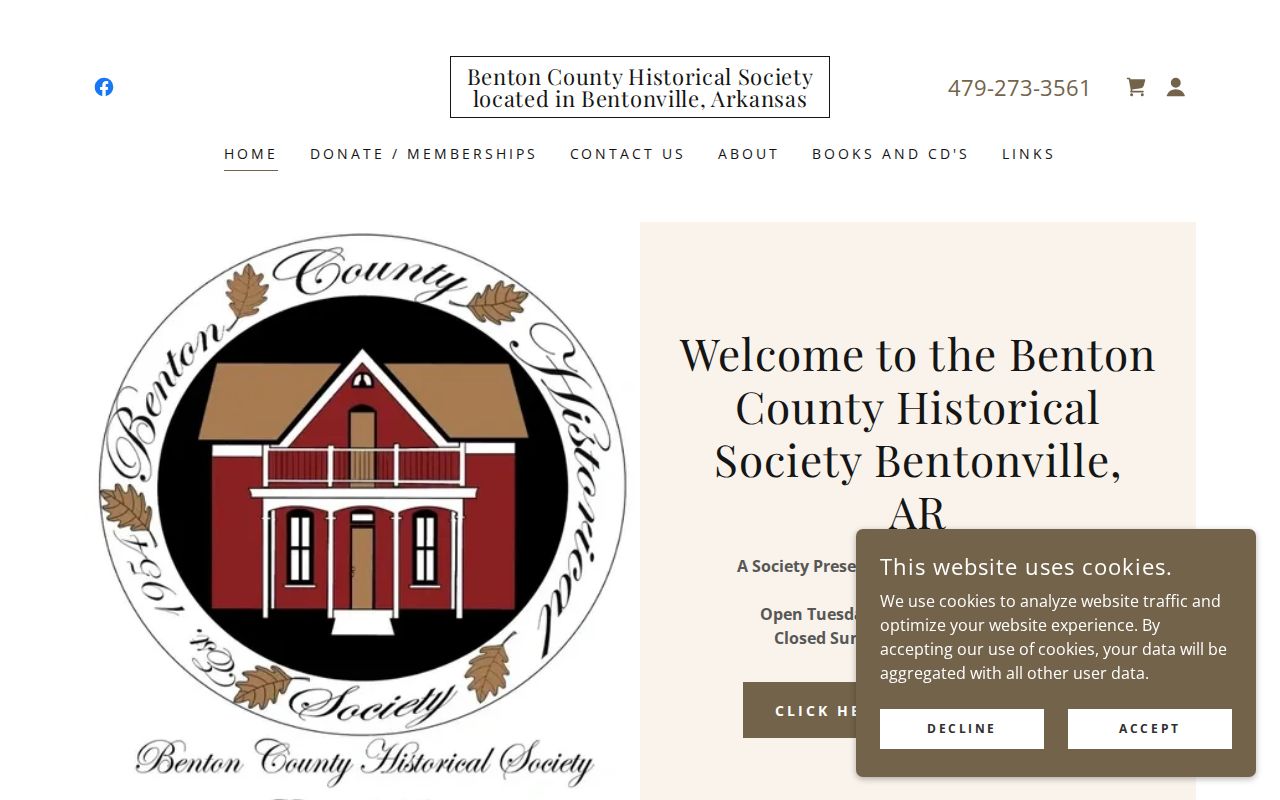
A tax name points to property, not always a home. A deed names parties to an ownership event. An obituary may give kin and place. A census gives a household at one date. Combining those roles is stronger than forcing one source to act like a directory.
Bentonville Names Beyond Directories
Vintage Bentonville collects community memory around businesses, churches, people, railroads, and yearbooks. Bentonville History Museum supplies local street and business context. Rogers Historical Museum adds obituary volumes 1 through 10, funeral and cemetery records, oral histories, vertical files by name and place, and about 3,000 photos. Shiloh Museum broadens the search across northwest Arkansas.
Use each as a lead, then seek a dated record. A yearbook can distinguish classmates with the same surname. A church history may explain a family tie. A vertical file can reveal a newspaper title or photo number. The Benton County Pioneer catalog adds full-name indexes for early journal volumes, while some catalog images may require a FamilySearch Center. Arkansas State Archives research services are another catalog and request fallback when local holdings stop.
Keep roles distinct. A Bentonville directory entry, owner record, census household, and community photo describe different facts at different dates.